Contain animals, protect property, and define boundaries with fencing built for Bay Area ground conditions and coastal weather - not just the dry interior.
Farm and ranch fencing in South San Francisco covers larger-perimeter enclosures for animals, gardens, and property boundaries, using wire, wood, and steel pipe materials rated for coastal conditions, with most projects complete in one to two days for smaller enclosures and longer for multi-hundred-foot runs.
True farm parcels inside South San Francisco city limits are rare - the city is dense and largely urbanized. But requests for agricultural-style fencing come from larger residential lots, community garden spaces, and properties near the unincorporated edges of San Mateo County where the rules are different depending on which side of the city line you are on. Whether you are containing chickens, horses, or simply defining a large backyard boundary, the materials and installation approach are very different from a standard decorative fence.
If you also want to keep dogs safely inside a smaller area of the yard, pet and dog fencing can be combined with a larger perimeter fence on the same property.
If you can push on a post and feel it shift, or if you can see it tilting away from vertical, the post is no longer doing its job. In South San Francisco's clay-heavy and fill-based soils, posts that were not set with proper footings are especially prone to this failure after a few wet seasons. A leaning post puts stress on every panel connected to it.
The coastal air in South San Francisco is hard on metal. Rust streaking down from hinges, wire staples, or gate latches means the hardware is corroding faster than it should. Left alone, corroded hardware weakens the entire fence structure and can fail at the worst possible moment - when animals are testing it.
If livestock, dogs, or wildlife are finding gaps, pushing through weak spots, or digging under the fence line, the fence is no longer serving its primary purpose. This is a safety issue as much as a property issue. A proper assessment usually reveals whether the problem is isolated to one section or indicates broader failure.
If you are bringing chickens, goats, or other animals onto a property that has never had them before, your existing fencing - if any - almost certainly was not built to contain or protect them. Farm and ranch fencing is a different product than a decorative yard fence, and getting it right before the animals arrive is far easier than retrofitting afterward.
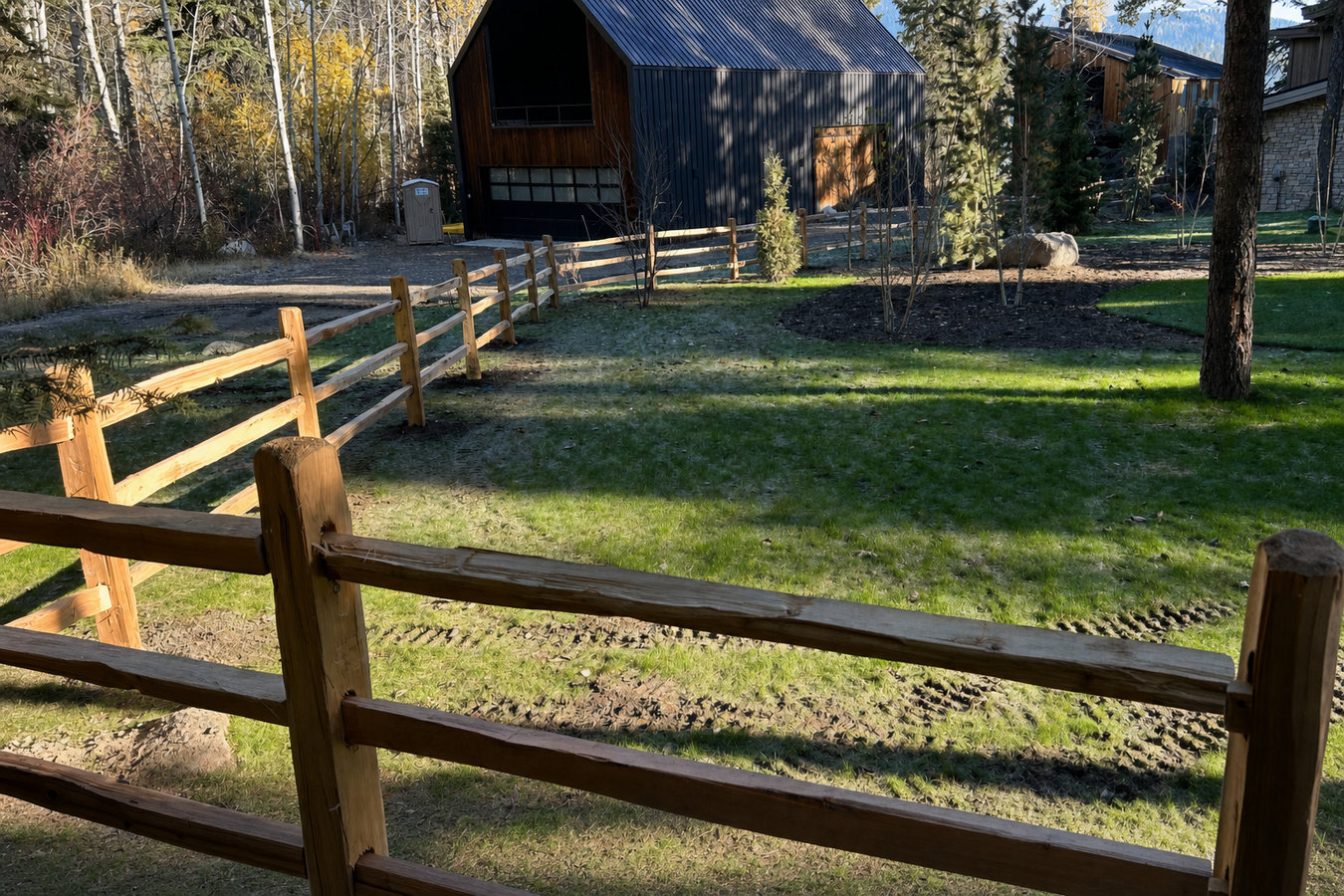
We install post-and-wire fencing, post-and-rail wood fencing, and steel pipe fencing - the three workhorses of agricultural enclosures. Post-and-wire with galvanized or vinyl-coated wire is the most common starting point because it covers large perimeters affordably and holds up to daily contact from animals without constant maintenance. For homeowners who want more visibility or a cleaner look, post-and-rail wood boards add a traditional, open style. Steel pipe is the right call when containment strength matters more than cost upfront - it handles large animals and heavy use far better than wood or wire alone.
Gates are the first thing to fail on a farm fence, so we set gate posts deeper and brace them more heavily than standard line posts. We also install pet and dog fencing for smaller dedicated dog runs within a larger perimeter, and chain link fence installation for homeowners who need a high-strength perimeter with good visibility and minimal maintenance.
Best for homeowners enclosing large areas affordably with galvanized or vinyl-coated wire that resists coastal corrosion.
Suits properties where a traditional, open look matters and where the animals being contained are not heavy or persistent pushers.
Ideal for horse paddocks, cattle pens, and any situation where containment strength and long-term durability outweigh upfront cost.
Properly braced and hung gates for driveways, paddock entries, and garden enclosures - set on oversized posts to prevent sagging.
The marine layer that rolls through South San Francisco most afternoons carries salt moisture that accelerates rust on bare metal and rot in untreated wood. A fence that might last 20 years in an inland climate can show serious deterioration in 10 years here with the wrong materials. We specify galvanized or vinyl-coated wire and pressure-treated or steel pipe posts because those hold up in this environment, not just on the first inspection but through years of Bay Area winters. The installation window also matters: the rainy season from November through March saturates the clay-heavy and fill-based soils here, making post-setting less reliable. We plan projects for April through October whenever possible to ensure posts are set in workable ground.
South San Francisco's city permits cover parcels within city limits, but properties near the western edge of the city or in unincorporated pockets fall under San Mateo County Planning and Building rules instead - and those two sets of rules are different. We also serve property owners in Pacifica and San Mateo, where similar peninsula soil conditions and county permit questions come up regularly. We handle the permit research and application before a single post goes in the ground.
We will ask how much fencing you need, what you are trying to contain or protect, and whether you have any existing fence that needs to come out. This 10- to 15-minute conversation helps us arrive at the site visit prepared rather than starting from scratch.
We walk your property, measure the fence line, and look at ground conditions, slope, and obstacles. A written estimate follows within a few days. You will hear back from us within one business day of your initial contact - no waiting a week for a callback.
We handle the permit application through the City of South San Francisco or San Mateo County, depending on your parcel. Before any digging begins, we call 811 to have underground utilities marked - this is required by California law and protects your gas lines, water pipes, and electrical.
Posts are set first - sometimes with concrete, sometimes compacted gravel, depending on your soil. Rails or wire are attached after the posts have firmed up. When the work is done, walk the full fence line with us before signing off: check that gates swing freely, wire is evenly tensioned, and posts are plumb.
We visit the property, handle the permit, and give you a line-item quote before any work begins. No surprise charges on the final invoice.
(650) 360-9238We choose galvanized wire, vinyl-coated options, and treated or steel pipe posts because the Bay Area marine environment makes standard choices degrade faster than homeowners expect. The UC Agriculture and Natural Resources cooperative extension has published guidance on post depth and material selection in California coastal soils - we work in line with those principles.
Parts of South San Francisco sit on clay-heavy or fill-based soils that shift after a wet winter. We assess the ground before deciding on post depth and footing method - we do not use the same approach on every job. Posts set correctly in these soils stay straight for years; posts set without that assessment start to lean within a season.
Whether your property falls under the City of South San Francisco Building Division or San Mateo County Planning and Building, we determine which rules apply to your parcel and handle the permit application before work begins. You avoid fines, stop-work orders, and expensive do-overs.
When the fence is done, we walk every gate, every corner, and every tension point with you before signing off. You can bring animals home confident that the fence does its job on the first day, not after a return visit to fix gaps you found later.
The combination of local soil knowledge, coastal material selection, and permit handling means the fence you get is built for how South San Francisco actually is, not how it looks in a product catalog.
For guidance on agricultural fencing materials and post-setting methods in California conditions, the UC Agriculture and Natural Resources cooperative extension (ucanr.edu) publishes research on fencing in coastal and clay-soil environments. Before any digging, contractors in California are required to call 811 (call811.com) to have underground utilities marked.
Secure enclosures designed around your dog's size and escape tendencies, keeping pets safely in the yard.
Learn MoreDurable galvanized or vinyl-coated chain link for large perimeters where strength and visibility matter most.
Learn MoreCall us today or request a free on-site estimate. We will walk your property, explain your options, and give you a written quote before any work begins.