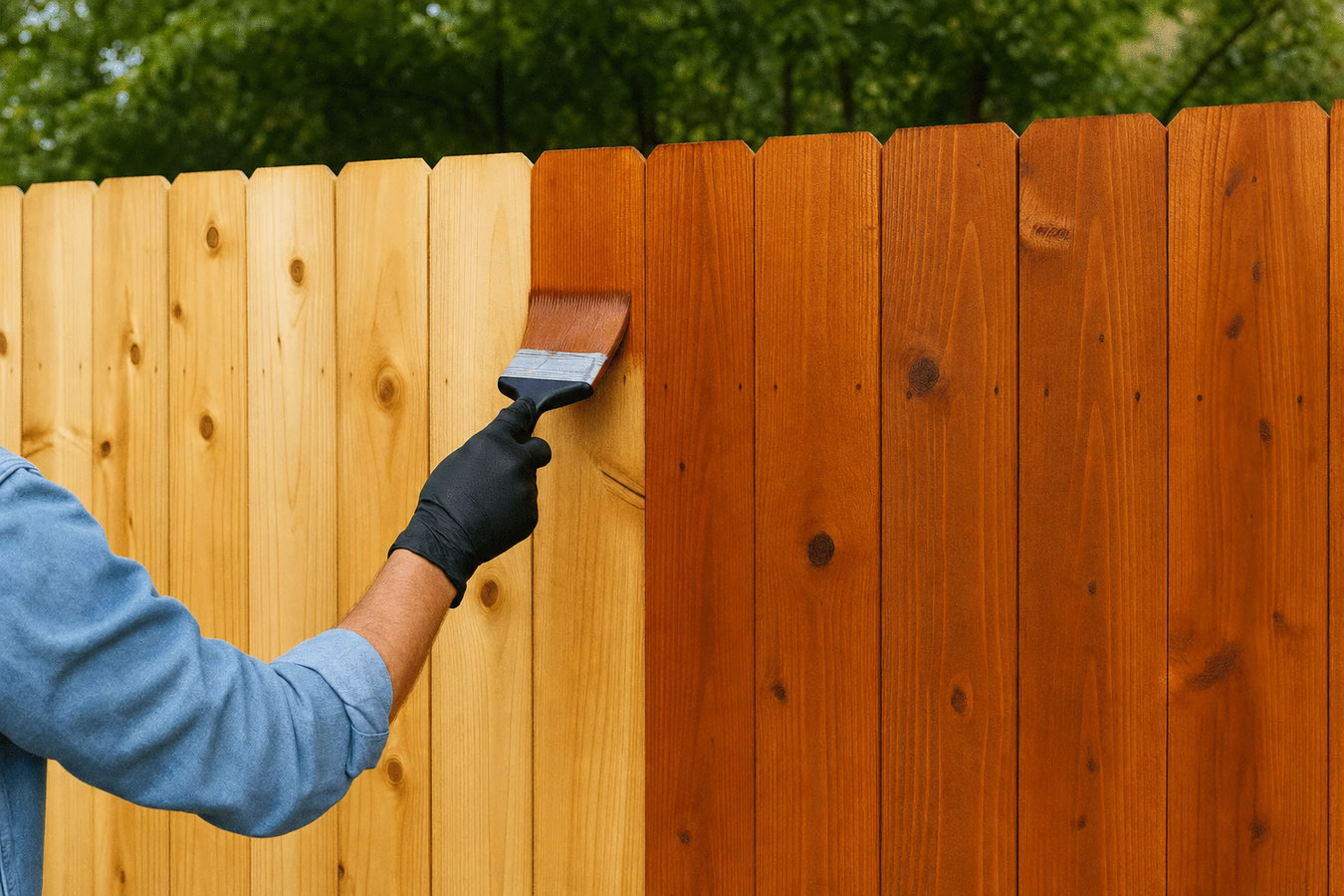
South San Francisco fog and salt air eat through unprotected wood faster than most people expect. We clean, prep, and seal your fence with products rated for coastal conditions - so the finish bonds right and lasts.
Fence staining and sealing in South San Francisco means cleaning the wood thoroughly, treating any mildew, letting the fence dry completely, and applying a stain and sealant rated for high-moisture coastal conditions - most residential jobs take one to two days on-site, with a curing period of 24 to 48 hours before the fence is ready for normal use.
If you have a wood fence that has started to gray, crack, or show dark spots, you already know something is wrong. The good news is that a well-timed stain and seal job can reverse that trend and add years to a fence that might otherwise need replacing. South San Francisco homeowners deal with a specific combination of marine fog, salt air, and concentrated wet-season rain that wears on wood faster than inland Bay Area cities - which means the quality of the prep and the choice of product matter more here than in most places.
If the damage on your fence has gone beyond what staining and sealing can fix - rotted boards, failed posts, major structural issues - our fence replacement service handles full removal and new installation. For fences in good structural shape that just need surface protection, we can often extend the life significantly. If you are also considering a new wood fence and want to plan for long-term maintenance from the start, our wood fence installation team builds with that protection schedule in mind.
Pour a small cup of water on your fence boards. If it soaks in within a minute or two and darkens the wood, the protective seal is gone. This is the clearest sign that your fence is absorbing moisture with every foggy morning and rainy day - and that damage is building up with each wet season.
When wood loses its color and turns a dull gray, that is sun and moisture breaking down the surface fibers. In South San Francisco, the combination of UV on clear summer days and daily fog exposure speeds this process. Gray wood is not just cosmetic - the surface is already degraded and more vulnerable to cracking and rot.
Small cracks running along the grain mean the wood is drying out and contracting. This is especially common on fences that face south or west and get direct afternoon sun after foggy mornings - the repeated wet-dry cycle stresses the wood fibers. Catching this early with a fresh stain and seal prevents cracks from deepening into structural damage.
Dark spots or a greenish-black film on your fence boards is mildew or algae, which thrives in South San Francisco's damp, mild climate. It is not just unsightly - mildew holds moisture against the wood and accelerates decay from the inside. A proper cleaning followed by staining and sealing stops the cycle and protects the wood going forward.
Every job starts with a thorough cleaning - usually pressure washing combined with a wood-cleaning solution that removes dirt, mildew, and any old peeling finish. We treat mildew before any stain goes on, because applying new product over contaminated wood is one of the most common reasons a finish fails early. Once the fence is clean and fully dry, we apply a stain and sealant chosen specifically for coastal conditions - oil-based penetrating stains for fences that need deeper protection, water-based acrylics for faster drying and lower odor, and solid or semi-transparent finishes depending on the wood condition and the homeowner's preference. If your fence is newer and the grain is still in good shape, semi-transparent stain gives a natural look that shows the wood character. If the boards are older and more weathered, solid stain covers surface imperfections and tends to last longer between applications.
We use products that meet California Air Resources Board low-VOC standards, which means less odor during and after the job - important when neighbors are close and yards are small, as they often are across South San Francisco. If the fence is reaching the end of what staining and sealing can reasonably extend, we will tell you honestly and discuss fence replacement as the right next step. And if you have a new wood fence installation planned or recently completed, we can schedule the first treatment at the right time in the wood's curing cycle for maximum bond.
Best for newer fences with wood grain worth showing - gives a natural look while still delivering moisture and UV protection.
Best for older or heavily weathered boards where surface imperfections are visible - covers more, lasts longer between applications.
Best for homeowners who want to keep the natural wood color with no added tint - repels water and slows weathering without changing the appearance.
South San Francisco sits directly in the path of marine fog that rolls in from the Pacific through the San Bruno Gap, often leaving fences damp well into the morning even on days that turn sunny by noon. The city is also close enough to San Francisco Bay that the air carries trace salt, which is corrosive to wood finishes and draws moisture into the grain faster than in inland neighborhoods. Together, these conditions mean that wood fences here absorb more water over the course of a year than fences in cities like San Jose or Livermore - and they show it. Fences in South San Francisco often gray and crack years sooner than homeowners expect when they have not been treated. The good news is that the Bay Area's Mediterranean climate gives you a reliable dry window from late spring through early fall to get the work done while conditions are right. Homeowners in San Bruno face similar fog patterns, as that city sits in the same coastal fog corridor just to the south.
Many of South San Francisco's residential homes were built between the 1940s and 1970s, and a number of original or early-replacement wood fences from that era are still standing. Older wood that has gone through decades of wet-dry cycles is more porous and may have surface mildew or minor soft spots. That history changes what prep is needed and which stain type will bond properly - a contractor who does not assess the wood condition before quoting is likely to underprepare, which shortens the life of the job. If your property is in one of the city's newer developments - particularly near the East Grand Avenue or Oyster Point corridors - your HOA may also have rules about approved fence colors or finish types, and we check those requirements before recommending a stain. Homeowners in Pacifica face an even more exposed coastal environment, and the same product and prep standards apply there.
Call or send a message and we will ask a few basic questions about your fence - length, material, and when it was last treated. Most estimates are scheduled as a free on-site visit, because the wood condition matters as much as the size of the fence. We reply within 1 business day.
We walk the fence and check wood condition, existing finish, mildew, and whether any boards need replacing before staining. You get a clear written breakdown of what is included - cleaning, prep, number of coats, and product type - so you can compare quotes accurately.
We schedule for a window with at least two dry days before and after the job. South San Francisco's fog patterns shape this calendar - we check the extended forecast and plan around it, not around our convenience. You will be asked to clear plants and furniture from the fence line before the crew arrives.
The crew pressure washes and preps the fence first - this step takes several hours and is the most important part of the job. Once dry, stain and sealant go on in two coats. Before leaving, we walk the fence with you and address any missed spots or uneven coverage on the spot.
Free on-site estimate, no obligation. We check your wood condition and give you a clear quote that includes cleaning and prep.
(650) 360-9238The most common reason a fence stain peels within a year is skipped prep - stain applied over dirty wood, mildew, or damp surfaces will not bond. Every job we do includes pressure washing and mildew treatment before any product goes on, and we never apply stain to wood that has not dried completely. That is not a premium add-on. It is how the work is supposed to be done.
South San Francisco's salt air and daily fog wear through standard hardware-store stains faster than most homeowners expect. We use products formulated for high-moisture, salt-air environments. The difference shows up not in what the fence looks like on day one, but in how it holds up at year two and three - which is what actually matters.
California has strict air quality rules for exterior coatings, and the products we use meet those standards. For homeowners in close-quarter South San Francisco neighborhoods, this also means less odor during and after the job - neighbors and pets are not dealing with fumes for days after the crew leaves. You can verify California Air Resources Board compliance at ww2.arb.ca.gov.
Many South San Francisco neighborhoods - especially newer developments near East Grand Avenue and Oyster Point - have HOA rules about fence colors and finish types. We ask about this before recommending a stain, so you do not end up redoing the work or negotiating with your association after the job is done. That one upfront conversation saves real aggravation.
Every one of these details comes from doing this work in South San Francisco specifically - not just general fence experience. The fog schedule, the salt air, the HOA landscape, the housing stock - these are the conditions our work accounts for on every job.
When staining and sealing can no longer save the fence, we handle full removal and new installation - posts, panels, and cleanup.
Learn MoreNew wood fence builds designed for South San Francisco conditions, with a maintenance schedule that keeps the finish intact for years.
Learn MoreSouth San Francisco's wet season starts in November - book now while dry weather is on your side and protect your fence going into the rainy months.